Everything You Need to Know About Generator Backup Before Hurricane Season in South Florida
Prepare for hurricane season in South Florida with the right generator. Choose between portable and standby options and ensure safety with our expert tips.
Hurricane season in South Florida is not something you prepare for the week a storm enters the Gulf. By that point fuel is gone from the gas stations, electrical contractors are booked solid, and the window to get your home properly protected has already closed. The homeowners who make it through every season comfortably are the ones who took care of their backup power situation before the season peaked. If you are reading this now, you still have time. Here is everything you need to know.
Why Backup Power Matters More in South Florida Than Almost Anywhere Else
South Florida has one of the highest lightning strike rates in the entire country. We deal with hurricane season from June 1st through November 30th, afternoon thunderstorms that roll through almost daily from June through September, and a utility grid that takes a beating every single year. Power outages here are not a matter of if. They are a matter of when.
When the power goes out in South Florida it is not just an inconvenience. It is food spoiling in the Florida heat within hours. It is a home with no air conditioning during a summer storm. It is medical equipment without power. It is a business losing revenue by the hour. A properly installed generator backup system changes all of that. When the lights go out on your street life inside your home keeps going.
Portable Generator vs. Whole Home Standby: Which One Is Right for You?
This is the first question we work through with every customer and the honest answer is that it depends on your home, your lifestyle, and your budget. There is no single right answer and we will never push you toward a solution that does not make sense for your situation.
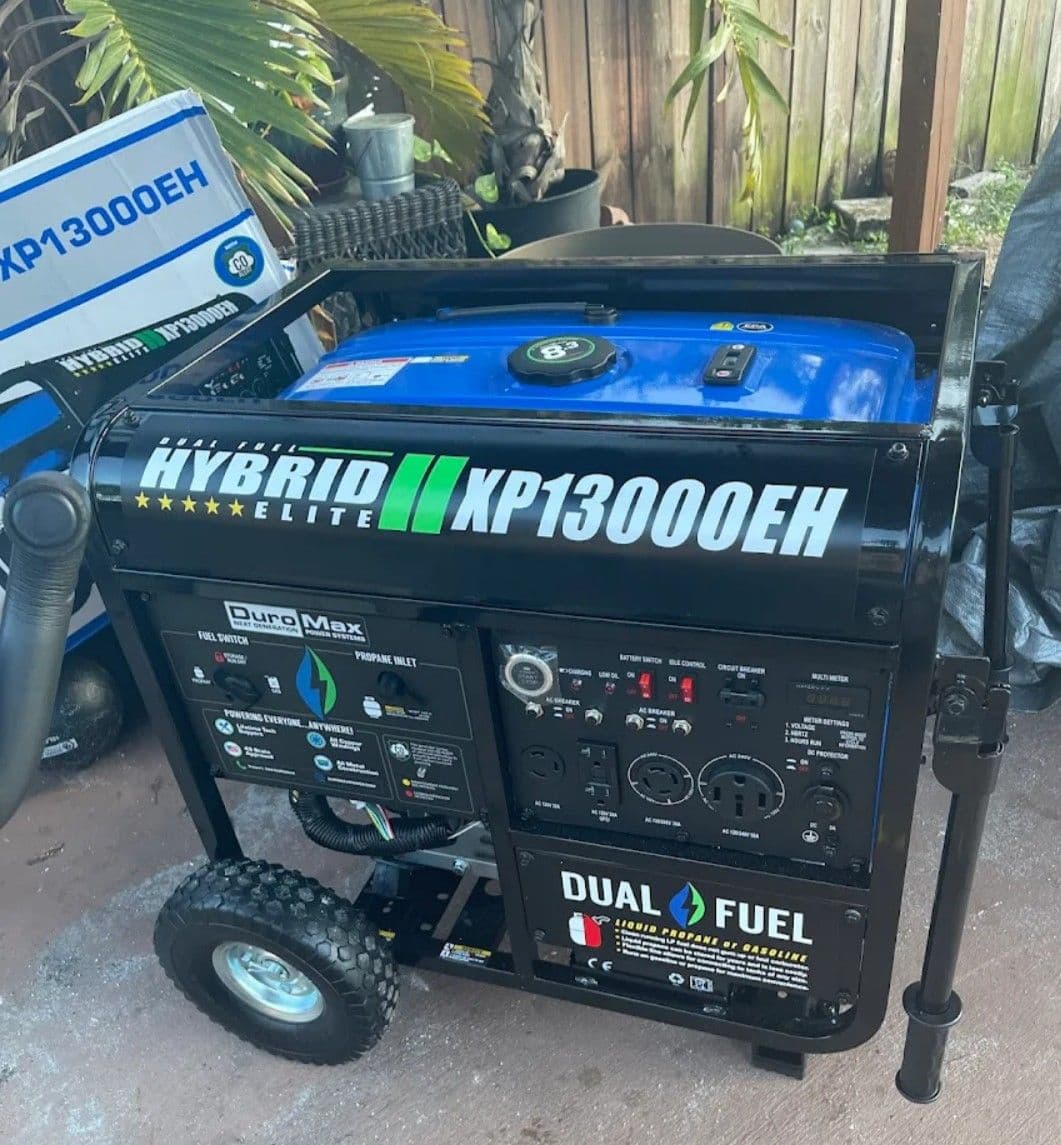
Portable generators are the more affordable entry point for backup power. A quality portable generator in the 10,000 to 13,000 watt range can keep a South Florida home running very comfortably during an outage. We recently performed a real world load test on a customer's 13,000 watt DuroMax generator and had the following running simultaneously: central AC, refrigerator, ceiling fans, lighting throughout the house, microwave, entertainment system, Wi-Fi, and a washing machine. All of that drew only about 13 amps. When the electric dryer kicked on it briefly spiked to 35 amps, still well within the generator's 50 amp capacity. With the dryer off there was enough headroom remaining to also run a standard water heater. For most South Florida homeowners a properly connected portable generator in the right wattage range is a reliable and cost effective solution that will keep your home comfortable through any outage.
Whole home standby generators are a different category entirely. These units are permanently installed outside your home, connected to your natural gas or propane supply, and activate automatically within seconds of losing power. No manual setup, no running to the gas station for fuel, no interruption to your day whatsoever. If someone in your household works from home, relies on medical equipment, or you simply want a completely hands off solution that requires zero action on your part during a storm, a whole home standby generator is worth the investment.
What Size Generator Do You Actually Need?
This is one of the most common questions we hear every spring and the honest answer surprises most people. You do not need a massive generator to stay comfortable during a South Florida outage. You need the right one, sized correctly for how you plan to use it.
For a home running true essentials during an outage, a portable generator in the 5,500 to 8,500 watt range connected through a proper interlock kit can comfortably handle a refrigerator and freezer, lights and outlets, Wi-Fi and phone chargers, fans, and a window AC unit or smaller central AC system. That covers the basics for most households and is a very manageable cost.
If you want to run a full central air conditioning system or an electric water heater simultaneously with everything else, stepping up to a 10,000 to 12,500 watt generator gives you the flexibility to do that comfortably without constantly managing your load. For larger homes or properties with higher power demands a whole home standby system is likely the more practical long term solution.
The generator itself is only half the equation. How it is connected to your home is just as important.
The Right Connection Makes All the Difference
A generator sitting in your garage is only as useful as the system connecting it to your home. There are two code-compliant options for connecting a portable generator to a residential property and the right choice depends on your home's electrical setup and your specific needs.
An interlock kit is installed directly on your existing electrical panel. It works by mechanically preventing your main breaker and your generator breaker from being on at the same time, which eliminates the risk of dangerous backfeeding into utility lines. Once your generator is running and the interlock is engaged, you simply turn off the breakers for circuits you do not need and turn on the ones you want to power. An interlock kit allows the capability to run every circuit in your home from your portable generator and is the more affordable of the two options.
A transfer switch is a separate dedicated panel wired to your home's most essential circuits. It offers a cleaner more streamlined solution, can be configured as manual or automatic, and is typically the right choice for larger homes or whole home standby generator setups.
Both options are fully code-compliant when professionally installed and both prevent dangerous backfeeding into utility lines. During our consultation we will assess your home's electrical setup and give you an honest recommendation on which solution makes the most sense for your situation.
Generator Safety: What Every South Florida Homeowner Needs to Know
Every hurricane season we respond to calls caused by improper generator use. Before storm season gets here there are several safety rules that every generator owner needs to understand.
Never run a generator indoors or in a garage. Carbon monoxide is odorless, colorless, and deadly and it builds up faster than most people realize. Your generator must always be running outside in an open area, at least 20 feet away from any windows, doors, or vents. Even a covered porch or open garage is not safe. Install a carbon monoxide detector inside your home as an additional layer of protection.
Never connect a generator to your home without a proper interlock kit or transfer switch installed by a licensed electrician. Using what is known as a suicide cord, a male to male extension cord plugged directly into a wall outlet, sends electricity backward through your home's wiring and out into the utility lines on your street. This creates an energized line that utility workers restoring power in your neighborhood have no way of detecting. Linemen have been electrocuted and killed because of backfed lines from improperly connected generators. It is illegal under the National Electrical Code and it puts lives at risk. If you or someone you know has been doing this please stop immediately and have a licensed electrician install a proper connection.
Test your generator before you need it. Run it under load at least once before hurricane season starts. Check the oil, confirm it starts, and make sure everything is operating correctly while you still have time to address any issues. A generator that has been sitting in a garage for twelve months may not start when you need it most.
Store fuel safely. Use approved containers, keep fuel away from living areas, and treat it with a fuel stabilizer if it has been sitting for more than 30 days. Degraded fuel is one of the most common reasons generators fail during an actual outage.
What About Whole Home Surge Protection?
No conversation about storm season preparedness is complete without addressing surge protection. Most homeowners think surge protection means the power strip behind their TV. But the surges that cause the most damage during storm season have nothing to do with what is plugged into your outlets.
Utility surges happen when power is restored after an outage. That sudden rush of electricity back through the lines can send a damaging voltage spike through every circuit in your home simultaneously, hitting your AC unit, refrigerator, appliances, and electronics all at once. Ambient lightning surges happen when lightning strikes anywhere in the general area around your home. Even without a direct hit, nearby lightning generates electromagnetic energy that travels through utility lines straight into your home's wiring and can cause significant damage throughout the house.
A whole home surge protector installed directly at your electrical panel protects every circuit in your home from both of these threats simultaneously. As of 2023 the National Electrical Code requires whole home surge protection under NEC 230.67 any time a main service panel is installed or replaced. It is also one of the most affordable and high impact upgrades a South Florida homeowner can make heading into storm season.
One important note: no surge protector will protect your home from a direct lightning strike. Whole home surge protection is specifically designed to guard against utility surges and ambient storm related voltage spikes, which are far more common and something most homeowners are completely unaware of.
Professional Installation and Code Compliance
Every generator connection and surge protection installation we complete is handled by licensed, insured electricians who know South Florida's electrical code requirements inside and out. We ensure that your system is safely connected, fully code-compliant, and ready to perform when you need it most. All of our work complies with the latest National Electrical Code requirements and local regulations for Broward and Palm Beach Counties.
We use only high quality generators and components from leading manufacturers. Our installations are built to last and designed to handle the demands of South Florida's storm season year after year.
Frequently Asked Questions
Why do I need a generator backup for my South Florida home? Power outages in South Florida are not a matter of if, they are a matter of when. Hurricane season, afternoon thunderstorms, and an aging utility grid mean that having a properly installed backup power system is one of the smartest investments a homeowner in our area can make. A generator keeps your AC running, your food cold, your lights on, and your family comfortable no matter what the season brings.
What is the difference between a portable generator and a whole home standby generator? A portable generator is the more affordable option. Connected through a proper interlock kit or transfer switch it can keep a South Florida home running very comfortably during an outage. It requires manual setup and fuel on hand. A whole home standby generator is permanently installed, connected to your gas supply, and activates automatically within seconds of losing power. No manual setup, no fuel runs, no interruption.
What size generator do I actually need? Most homeowners overestimate what they need. For running true essentials a 5,500 to 8,500 watt generator is often more than sufficient. If you want to run full central AC and an electric water heater simultaneously, stepping up to 10,000 to 12,500 watts gives you that flexibility. We will assess your home and give you an honest recommendation.
What is a generator interlock kit? An interlock kit is a code-compliant device installed on your existing electrical panel that allows you to safely connect a portable generator to your home. It prevents dangerous backfeeding into utility lines and gives you the capability to power every circuit in your home from your portable generator.
What is backfeeding and why is it dangerous? Backfeeding occurs when a generator sends electricity backward through your home's wiring and out into the utility lines on your street. Utility workers restoring power have no way of knowing the line is energized. Linemen have been killed as a result. It is illegal under the National Electrical Code and is why every generator connection we install uses a proper interlock kit or transfer switch.
Will my generator work with my existing electrical panel? Not always. Depending on the age and condition of your panel a service upgrade may be required before an interlock kit or transfer switch can be installed. If your home has an FPE or Zinsco panel replacement is strongly recommended regardless since those panels have well documented safety issues and are frequently flagged by insurance companies and home inspectors.
My insurance company flagged my electrical panel. What should I do? Insurance companies frequently flag older panels including Federal Pacific Electric and Zinsco and may refuse coverage or charge higher premiums until they are replaced. Give us a call and we will assess your setup and recommend the right solution to get your home insurable and up to current code.
How far in advance should I schedule my installation before hurricane season? As early as possible. Our schedule fills up quickly as June 1st approaches. We recommend scheduling no later than April to ensure your home is ready before the season peaks. If it is already storm season call us anyway and we will do our best to get you taken care of as quickly as possible.
Do you offer whole home surge protection? Yes and we strongly recommend it alongside any generator installation. As of 2023 the NEC requires it under NEC 230.67 any time a main panel is installed or replaced. It protects every circuit in your home from utility surges and ambient lightning surges throughout storm season and is one of the most affordable upgrades a South Florida homeowner can make.
Are your electricians licensed and insured? Yes. All of our electricians are fully licensed and insured in the state of Florida. When we work on your home you are getting professionals who take your safety seriously on every job.
Do Not Wait Until a Storm Is Named
Every year without fail our schedule fills up the moment a storm enters the Gulf. The homeowners who are protected every season are the ones who called before the rush. Hurricane season runs from June 1st through November 30th. If you are reading this in the spring, now is the time. If it is already storm season, today is the day to call.
Contact Envision Electrical Solutions LLC to schedule your generator consultation. We will assess your home, walk you through your options honestly, and get you set up with a backup power solution you can count on.
📞 954-638-4493 📍 Serving Fort Lauderdale, Davie, Hollywood, Pembroke Pines, Pompano Beach and Broward and Palm Beach Counties.