- Home
- Blog
- Why Your Outlet Works Intermittently or Feels Warm and What Is Really Happening Behind the Wall
Why Your Outlet Works Intermittently or Feels Warm and What Is Really Happening Behind the Wall
Learn about common signs of outlet failure, such as intermittent function and warmth. Understand the causes, risks, and solutions to prevent electrical hazards.
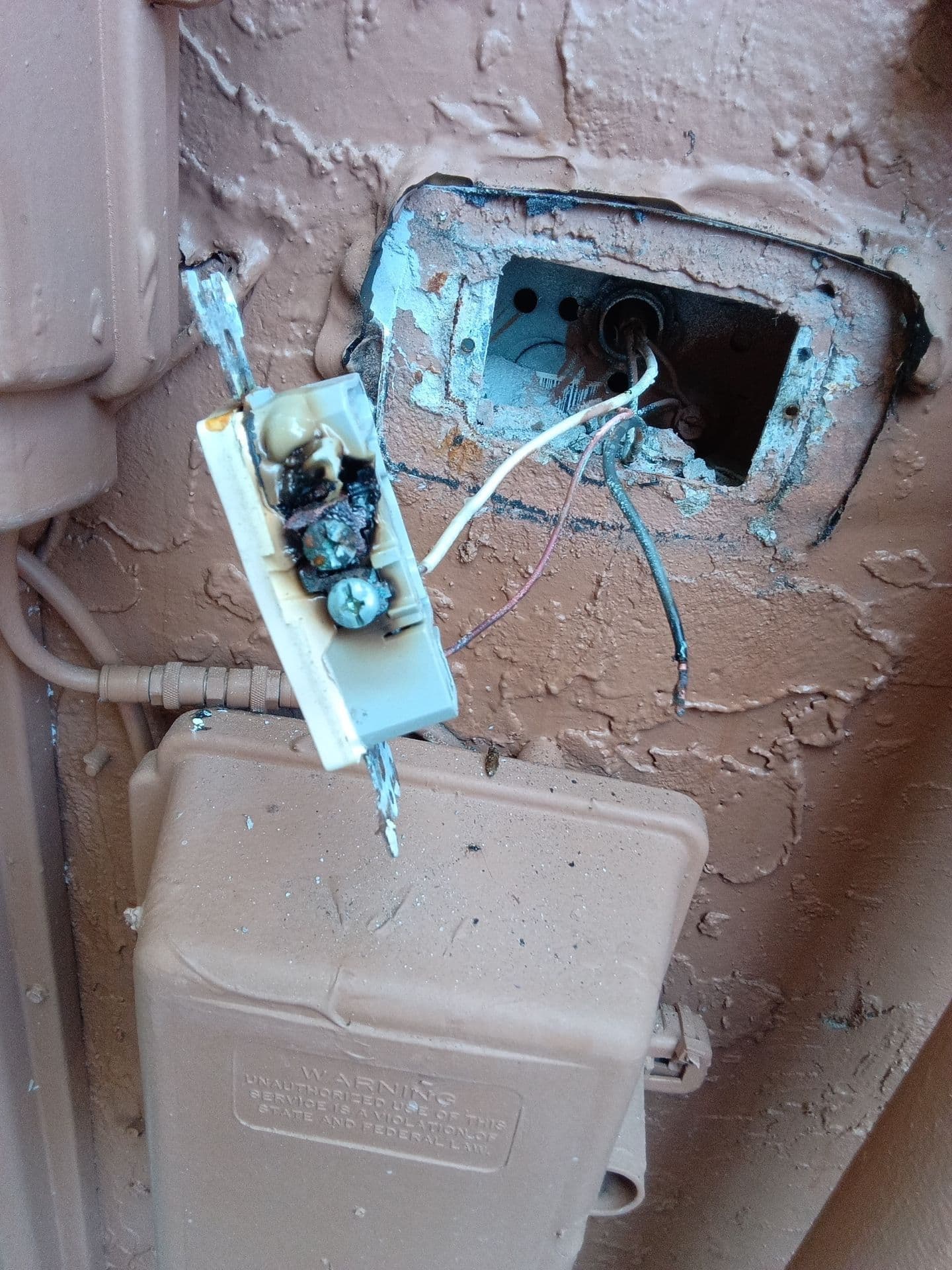
Most electrical problems start long before a homeowner realizes something is wrong. A failing outlet usually does not begin with smoke or melted plastic. It starts with small, easy to ignore symptoms:
The outlet works on and off
You hear a faint sizzling or crackling
A burning or hot plastic smell comes and goes
The outlet feels warm or hot to the touch
A plug seems loose or wiggles when inserted
These small warning signs are the early stages of a much bigger problem that can eventually lead to the severe damage shown in the photo above.
The Real Culprit: Loose or Failing Connections
Inside every outlet, electricity flows through terminal screws or push in connections. If those connections loosen over time, which is very common, the flow of electricity becomes restricted. This restriction creates resistance, and resistance creates heat.
The heat does not stay minor for long.
As the connection weakens, the device begins to warm up. Eventually, the heat becomes strong enough to:
Melt the plastic around the outlet
Burn or char the terminals
Damage the insulation on the wires
Cause arcing, which is electricity jumping across gaps
Trip breakers or create intermittent power
Once arcing begins, the outlet is no longer just acting up. At that point it has become a fire hazard.
Why This Happens More Often in South Florida
Homes in Broward County and Palm Beach County experience these failures more often because of:
Humidity and moisture, especially on exterior outlets
Older wiring and aging devices
Heat expansion and contraction, which loosens screws over time
Corrosion from outdoor conditions
Heavy appliance loads on older outlets that were not designed for modern usage
A simple loose connection can get worse very quickly in our environment.
Why the Outlet in the Photo Looks So Extreme
The melted and burned outlet in the image is what often happens when early warning signs go unaddressed. It did not fail in a single day. It likely:
Started with a loose or corroded terminal
Developed resistance
Heated up repeatedly
Began arcing across the weakened connection
Eventually burned the device internally
By the time it reaches this stage, the outlet is completely destroyed and the wiring in the box may also need repair or replacement.
What You Should Do If You Notice These Signs
If you experience any of the following, the outlet should be inspected immediately:
Crackling or sizzling noises
Burning smells
Warm or hot outlet faces
Intermittent power
A plug that feels loose or will not stay in
Discoloration on the outlet or wall plate
These issues will not fix themselves and they always get worse over time.
Fixing the Problem the Right Way
A proper repair usually involves:
Removing the damaged outlet
Inspecting the wiring for heat damage
Re terminating or replacing affected wiring
Installing a new, code compliant, weather rated device for exterior locations
Ensuring a tight and secure mechanical connection
Testing voltage, continuity, and GFCI or AFCI protection where applicable
This is not a DIY project. Once wires have been overheated, they can become brittle or unsafe to reuse. A licensed electrician will know when a safe re termination is possible versus when a short section of wiring needs to be cut back and replaced.
Protect Your Home Before the Problem Gets Worse
Small electrical symptoms are easy to ignore until they turn into burnt outlets, damaged wiring, or fire hazards.
If you have noticed intermittent power, warm outlets, burning smells, or strange noises, schedule an inspection before the problem escalates.
Serving Fort Lauderdale, Pompano Beach, Coconut Creek, Deerfield Beach, Boca Raton, Coral Springs, and surrounding areas.
Give us a call at 954-638-4496